
It’s no secret that our nation’s critical infrastructure, including facilities such as airports and ports, electric generation and transmission plants, water and wastewater treatment facilities, correctional institutions, and chemical, oil and gas, and nuclear sites, face a variety of adversarial threats. Historically, these facilities only needed to be concerned with tracking potential terrestrial adversaries. However, as drones are becoming more accessible and more common, threats to these facilities have taken to the skies.
Drones are interrupting airport operations, with the Federal Aviation Administration (FAA) now receiving more than 100 reports per month of uncrewed aircraft system (UAS) sightings. The Department of Homeland Security (DHS) and FBI are also seeing more incidents of drones attempting to damage electric generation and water/wastewater treatment facilities or posing cybersecurity threats to corporations or large data centers. While traditional critical infrastructure security systems consisting of devices such as cameras and thermal sensors, and maybe an RF sensor or human guard, have provided adequate critical infrastructure security in the past, these systems are not sufficient for detecting new aerial threats.
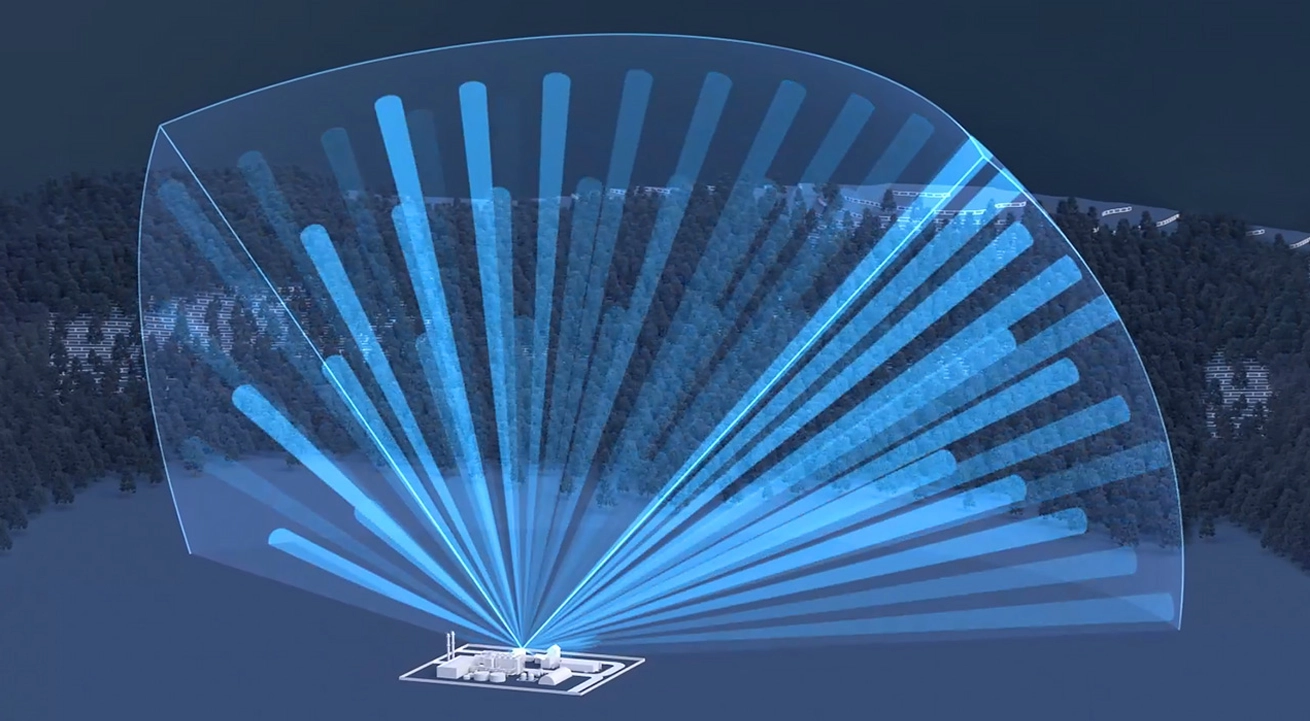
Facilities now need critical infrastructure security solutions that provide enhanced perimeter security coverage both of the air and at greater distances on the ground. This requires a layered solution that includes enhanced COTS three-dimensional radar for simultaneous ground and air surveillance, or focused detection in the highest-risk threat vector. High-performance radar provides the most accurate threat detection data, boosting performance of other sensors in the security stack.
Whether curious, clueless, or nefarious, a person, vehicle, or drone can create disruption at critical infrastructure sites by causing harm to people, assets, and operations. And for some sites, a localized disruption can have far-reaching consequences – imagine the impact to households, traffic flow, health centers, and businesses if an energy transmission site servicing a major metropolitan area goes down due to a threat disturbance.
For critical infrastructure facilities with security solutions deployed at the perimeter, threat visibility may only extend a few feet beyond the fence line and only provides two-dimensional ground-based threat detection. The effectiveness of a short-distance perimeter solution further diminishes at night and in bad weather. Even if an extended or night visibility camera is a part of the system, the optical devices will likely struggle to lock on target and maintain visibility when viewing conditions are not optimal.
Some facilities are enhancing perimeter security by adding aerial monitoring capabilities to their critical infrastructure security systems using RF sensors. It is worth noting that RF sensors present several gaps and issues including:
1) The inability to detect dark drones, also known as ‘silent drones,’ as these devices do not emit RF signals.
2) The need for multiple RF sensors to achieve threat position accuracy by way of signal triangulation.
3) Possible elevated false-positive rates in urban environments prompted by daily-use devices also emitting RF signals.
4) Potential concerns over RF “listening” as it pertains to individual privacy rights.
You can learn more about RF sensors in this post.
While RF sensors can lend value as a complementary detector, a comprehensive layered solution for critical infrastructure requires technology that detects everything that moves on the ground or in the air, even in the absence of an RF control signal. With this in mind, radar is the most effective detection technology available for critical infrastructure security. Radar provides precise location and tracking data that can be used independently and in concert with other sensors to improve security outcomes.RF detection is dependent on signal emission and may not detect drones operating without active or accessible communication links. Together, these limitations become more significant as non-emitting or “dark” drones become more common, reducing the reliability of RF-only detection approaches.
While RF sensors can lend value as a complementary detector, a comprehensive layered solution for critical infrastructure requires technology that detects everything that moves on the ground or in the air, even in the absence of an RF control signal. With this in mind, radar is the most effective non-cooperative detection technology available for critical infrastructure security Radar provides precise location and tracking data that can be used independently and in concert with other sensors to improve security outcomes.
For high-risk critical infrastructure sites, the most effective solution for accurate threat detection begins with radar plus PTZ cameras integrated with the security team’s preferred/recommended C2 and/or video management system (VMS) software. This combination of technology delivers highly accurate all-weather, 24/7 detection of air and ground targets, visual confirmation of detected targets, and synced recording of an object’s location data and observed behavior.

The combination of radar detection confirmed by PTZ reduces noise and false positives and fills a gap that would otherwise require a dedicated team member to sort false positives from true targets. In addition to providing comprehensive situational awareness, the recorded track data and video can be used to forensically dissect an incident or for prosecuting criminal activity. And for sites with higher risk and budgets to support parsing detection technology by type of threat or approach, adding RF detection, below or above ground audio sensors, or other technology may be appropriate.
Despite the proven value of radar for defense and national security applications, using traditional phased-array radar systems for critical infrastructure security has never been a practical option. Not only are the cost and size of these systems prohibitive but phased-array radars are designed for much longer-range detection needs and experience challenges with identifying newer drone threats.
But radar technology has rapidly advanced in the last few years. While there are now several small form factor radar options available that meet basic use case requirements and budget constraints of critical infrastructure sites, most of these options underperform when it comes to providing dependable, comprehensive airspace situational awareness.
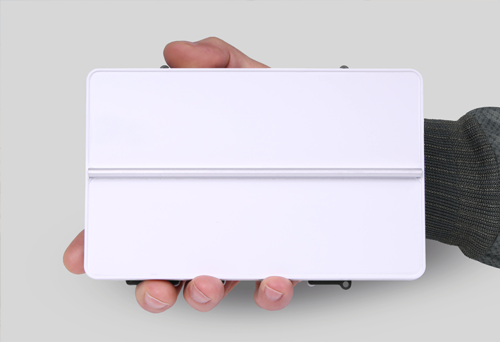
However, a new and innovative design approach called metamaterials has created a breakthrough in radar technology by reducing size, weight, power, and cost (SWaP-C) while retaining accuracy and relative detection distance. The metamaterials electronically scanned array (MESA®) radar is the size of an iPad, weighs less than 5 lbs and packs a power-punch, delivering detection capability symmetrical with drone technology advancements, critical infrastructure use cases, and security budgets.
For critical infrastructure sites seeking to expand their threat detection capabilities, choosing a radar that augments current security solutions and expands situational awareness as threats evolve is paramount. MESA radar is differentiated in how it addresses these points by providing three-dimensional coverage, detecting everything moving on the ground and in the air, and integrating with existing C2, VMS, and sensors.
MESA radar optimizes existing solutions and creates new options for maturing security solutions. For example, a site that has historically placed static cameras at 20-foot intervals along a fence line for defensive coverage can move to a radar + PTZ camera solution for broader coverage with fewer devices. This ability to use technology as a productivity multiplier is particularly important for critical infrastructure security teams that are stretched thin and challenged to do more with less staff and budget.
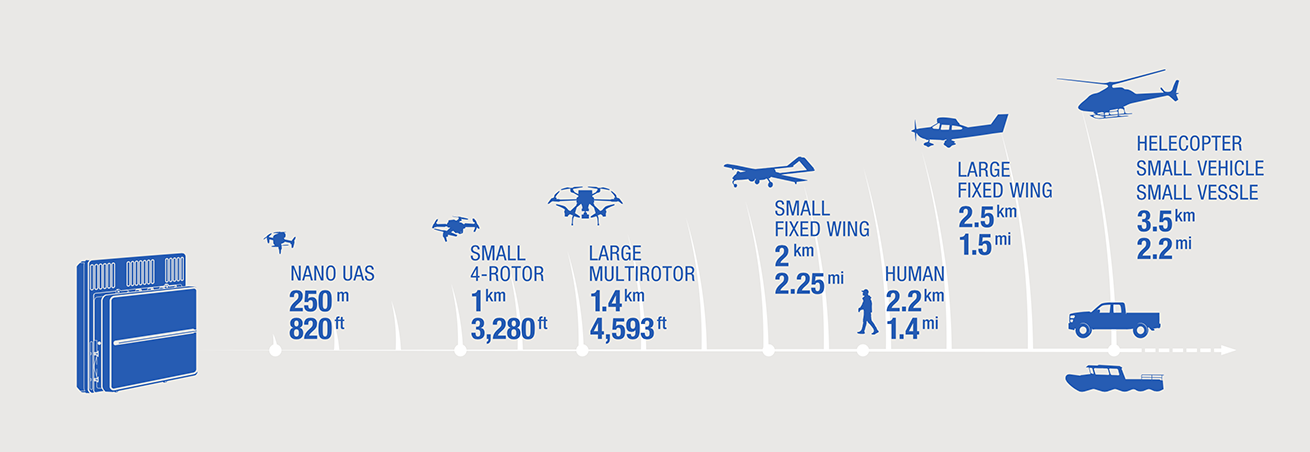
While other radars may detect one type of threat better than the other, MESA radar delivers equal efficiency, accuracy, and value in both ground and air domains, and at the same time for multiple types of threats (drone, human, vehicle, or boat). It also has a detection range that is much greater than other radars in its weight class and outcompetes sensors such as cameras by maintaining target lock and operating dependably regardless of weather or lighting conditions.
Most effective radar systems, including Echodyne’s MESA radar, utilize micro-Doppler to capture a fourth data dimension – velocity. This provides users with the speed of a target in a given direction in addition to a target’s azimuth, elevation, and range. Processing the micro-Doppler frequency shift is important because it helps radar software distinguish drones from birds, for example. Micro-Doppler also makes it possible to detect hovering drones near or far from a facility and as the drone approaches. This is critical for sites that, in addition to risk of physical breach, have a moderate-to-high-risk of sensitive data being compromised or stolen using a hovering drone carrying a surveillance or data theft device.
Echodyne’s MESA radar produces extremely accurate data which is why it has become a preferred ultra-low SWaP radar for defense and national security missions. The fidelity of the radar data is also ideal when using that data to slew other devices, and when seeking to get more from existing lower-functioning sensors. For example, if a critical infrastructure team wants to use existing or lower-cost camera equipment, MESA radar paired with the right video analytics platform will boost operational effectiveness by aiding in dual verification without the need to upgrade existing camera systems. This is a value for security teams who are closing security gaps and assessing risk while developing plans for future-state security system enhancements.
Echodyne MESA radars are designed with an open architecture that enables seamless integration into existing security and defense ecosystems. Through well-documented application programming interfaces (APIs), the radar can deliver structured data streams to a wide range of command-and-control (C2), video management system (VMS), and sensor fusion platforms.
This approach allows organizations to incorporate radar data into their existing workflows without requiring a complete system overhaul. Data from the radar can be fused with inputs from optical sensors, RF systems, and other detection technologies to create a unified operational picture.
The value of this architecture is twofold. First, it reduces integration complexity and accelerates deployment timelines. Second, it prevents vendor lock-in by allowing operators to choose and evolve their broader system components over time.
High-speed data exchange is a critical advantage in this architecture. By delivering precise, low-latency tracking data, MESA radar enables downstream systems—such as PTZ cameras—to slew quickly and maintain target lock more effectively. This improves overall system responsiveness and increases the probability of successful identification and mitigation during an incident.
As discussed throughout this eBook, radar is a critical sensor for modern security teams seeking to protect, defend, and optimize their efforts in a changing threat landscape. Radar generates precise geolocated data to accurately and reliably detect, classify, and track multiple threats simultaneously. MESA radar builds on this with the ability to detect all ground and air threats accurately and simultaneously from the same panel. Plus, radar is designed to enhance all other sensors within the layered solution. With the exacting position and track data radar provides, security teams responsible for defense, government, and critical infrastructure applications can thoughtfully observe the behavior of potential threats and calculate a suitable and timely response.

