
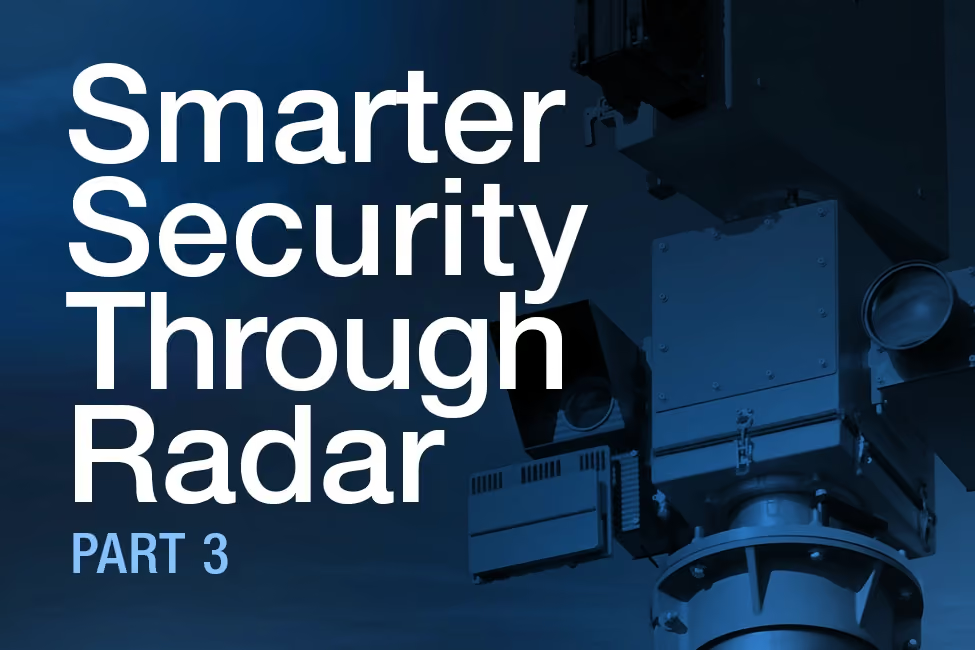
RF detection tools are sometimes confused with radar, to the point where one might be similar with or replace the other. These systems are actually quite different! The ability to accurately distinguish between the two is becoming imperative as the need for drone detection is increasingly urgent and many organizations are considering using RF sensors for their counter-drone technology. The general rule remains: one tool is never sufficient - layered systems are the answer.
Let’s start with the differences between these two systems by looking at the method these devices use for object detection. RF sensors are passive tools that identify drones by detecting signals in the radio spectrum when those signals are present. The RF sensor provides details about the drone itself, the signals used to communicate, and details about the operator. Radar instead actively transmits signals in the radio spectrum. Any object located in the path of the radar signal will generate a reflected signal back to the radar. The received radar signal is rich with information about the size, shape, location, range, velocity, and orientation of the object.
While radar can offer significant information about the object, it has no means to detect or interrupt any communication to and from the drone. Since RF sensors detect the RF communication signals from the drone operator to the drone itself, it is possible to track the location of the drone operator, which can then be reported to authorities if necessary.
The role of RF sensors in drone detection has evolved significantly in recent years due to changes in both regulation and drone communication architectures. While RF sensors remain useful, their effectiveness is increasingly dependent on the specific operating environment and the type of drone being used.
One of the most important developments shaping RF-based detection is the widespread adoption of Remote ID requirements. Remote ID enables compliant drones to broadcast identifying and positional information, which can be received by appropriately equipped systems. This creates a new category of RF-based awareness that is structured and standardized, rather than dependent on proprietary protocols or vendor-specific implementations.
However, this evolution also introduces important limitations. Remote ID is only available for compliant aircraft operating within regulated frameworks. Non-compliant drones, modified platforms, autonomous systems operating without active communication links, or drones using encrypted or non-standard communications may not be detectable through RF-based methods alone. Additionally, the broader communications landscape for drones is changing. The increasing use of encrypted digital links, autonomous navigation (pre-programmed or AI-assisted flight paths), and cellular or satellite-based communications reduces the likelihood that a drone will emit RF signals that can be reliably intercepted and interpreted by traditional RF detection systems. This creates a critical distinction: RF sensors provide insight into communication behavior, not physical presence.
As a result, RF detection should be viewed as a complementary capability within a layered system. It can provide valuable information such as:
But it cannot be relied upon to detect all threats.
Radar, by contrast, detects objects based on physical movement and presence in the environment, independent of communication method or intent. This makes radar the foundational sensor for ensuring complete coverage, while RF tools add contextual intelligence when signals are present.
In modern counter-drone systems, the combination of radar, RF, and optical sensors remains essential—but the role of each must be clearly understood. RF is no longer a primary detection mechanism; it is an enrichment layer.
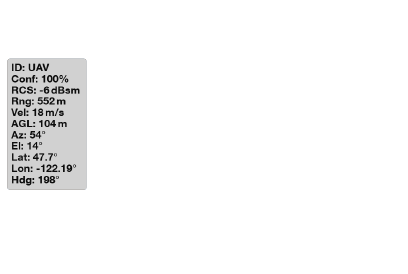
In situations where radar data clearly identifies a drone in the wrong place and RF tools detect no object, this creates a heightened level of alert and importance of maintaining optical lock while the security processes unfold. For high-risk facilities and sensitive locations, a system of multiple layered sensors with radar as the baseline is always the best approach.
Radar, at least high-performing radar, will detect, track, and classify any object that moves in the airspace, communications signature or not, and it will accurately cue optical sensors that maintain visual lock on suspect objects. Many drones will be communicative, and defense and some national security agencies will likely retain high-performance RF capabilities in the tool shed. And, just like radar and optical and some acoustic, each sensor will be used as needed for the mission and risk profile.
Part 1:
What is Radar?
Part 2:
Why Use Radar for Situational Awareness?
Part 3:
The Current and Future Role of RF Sensors
Part 4:
Balancing Innovation and Cost Symmetry Against Newer Threats
Part 5:
Enhancing Layered Threat Detection Solutions for Defense Applications with Radar
Part 6:
Improving Situational Awareness for Government Security Applications with Radar
Part 7:
Enriching Critical Infrastructure Security with Radar

