
Thought Leadership Round Up 2025: What the Echodyne Team Had to Say this Year

Echodyne’s team of radar experts shared their security technologies insights throughout the year as Critical Infrastructure and public safety continued to be affected by the rapid proliferation of drone use – both for good and bad.
In 2025, Echodyne’s thought leaders tackled issues like the importance of counter-drone technology at large-scale events (especially critical as we track towards the FIFA World Cup 2026) to the ever-changing nature of Beyond-Visual-Line-of-Sight (BVLOS) and its impacts on how drone response can change the very nature of policing.
A major takeaway is that the “drone challenge” is as dense and complicated as ever – whether drones are perceived as threats or leveraged as tools. In both cases, we must find a way to effectively manage the airspace to accommodate for all different kinds of drone use, spanning the spectrum of productive, careless, and downright malicious.
Here’s a round-up of some of the top opinion pieces penned by our team members and trusted industry partners this year:
Police1: How law enforcement can detect and apprehend criminal drone pilots at large events
By Yaniv Mendelson, Director of Business Development at Echodyne, and Robert Tabbara, CEO and founder of AirSight
Yaniv and Robert explain how rising drone activity is creating major security challenges for stadiums, concerts, and other large events, especially since current Federal Aviation Administration (FAA) law prevents police from stopping drones in flight, no matter how imminent of a threat they pose.
The two highlight recent high-profile disruptions and outline why law enforcement must rely on multi-layered detection technology, combining radar and other suitable sensors, to identify UAVs, track their behavior, locate operators, and respond effectively. While officers cannot neutralize drones mid-air, Yaniv and Robert show how these tools enable authorities to assess threats, protect crowds, coordinate with federal agencies, and ultimately apprehend drone pilots.
Security Journal Americas: Smarter perimeter security for a new era of threats posed by drones
By Kara Quesada, Senior Director, Marketing at Echodyne and William Edwards, Director of C-UAS Training – ENSCO
Kara and William explain how drones have rapidly evolved from harmless hobby devices into a serious security threat, forcing critical infrastructure teams to rethink perimeter protection. They describe how unauthorized UAVs can bypass traditional “guns, gates and guards,” prompting security professionals to adopt a three-dimensional mindset and conduct drone-specific vulnerability assessments that identify threats, critical assets, vulnerabilities, consequences and mitigation strategies.
Kara and William also emphasize that effective defense requires a layered sensor architecture, anchored by precision radar, to reliably detect, track and assess drones of all types. They also share that proactive planning and integrated sensing technology are essential for securing airspace and protecting high-risk sites in this new era of aerial threats.
Police1: Extending the reach: How BVLOS operations are transforming drone response in policing
By Yaniv Mendelson, Director of Business Development at Echodyne, and Don Redmond, retired Chula Vista Police Captain and Vice President of Advanced Public Safety Projects at BRINC
Yaniv and Don describe how Drone as First Responder (DFR) programs are transforming police response by allowing drones to reach incidents before ground units and provide real-time situational awareness. They explain that expanding these programs into beyond visual line of sight (BVLOS) operations, enabled by higher-altitude flight and advanced radar, dramatically increases coverage, improves safety, and helps agencies meet FAA safe flight requirements.
Yaniv and Don highlight radar’s unique ability to detect all aircraft, integrate seamlessly into command systems, and reduce staffing burdens, positioning it as a foundational technology for scalable, 24/7 drone response. They urge that agencies adopting BVLOS-capable tools today will strengthen emergency response and better serve their communities as public safety aviation continues to evolve.
Critical Infrastructure Resilience and Protection News: Critical Infrastructure Security Doesn’t Have Time for False Alarms as the Airspace Gets Busier with Drones
By Curtis Walters,VP Sales, Government and Critical Infrastructure at Echodyne
Curtis Walters explains that drones have rapidly become a major threat to critical infrastructure, with recent incidents, from the highly publicized New Jersey airspace disruptions to attempted attacks on power facilities, showing how easily UAVs can evade traditional ground-focused security systems.
As the airspace grows busier and false alarms surge, he warns that outdated optical, RF, and 2D perimeter tools leave overstretched security teams vulnerable to missed threats and operator fatigue. Curtis argues that reducing false positives is essential, and that modern protection requires a multi-layered counter-UAS approach to help critical infrastructure security operators defend against espionage, cyber intrusions, kinetic attacks, and swarms in an era where the aerial domain has become a primary vector of risk.
Jump to page 8 in the CIRP News Summer 2025 Edition to read Curtis’ full take on the issue.

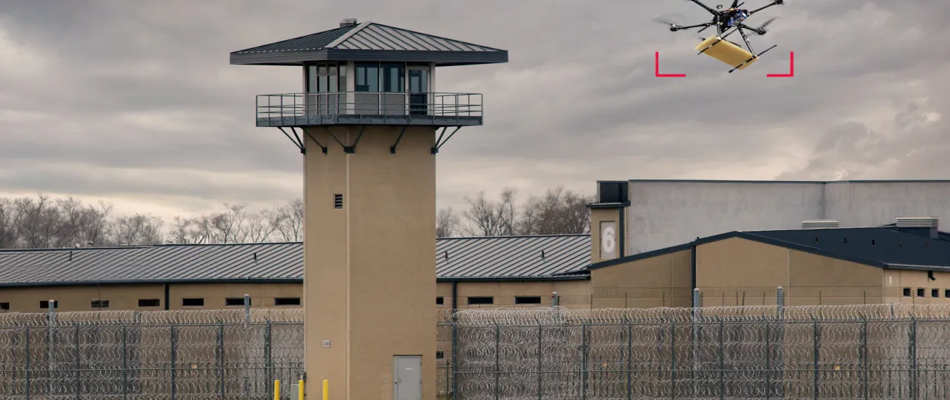
Justice Design News: Counter-Drone Security: A Necessary Part of the Justice Facility Blueprint
By Kara Quesada, Senior Director, Marketing at Echodyne
Kara details how rapidly escalating drone incursions, now used for smuggling, surveillance, escape attempts, and coordinated multi-drone distractions, have exposed severe gaps in legacy prison and justice-facility security systems built for a pre-drone era. She explains that outdated perimeter sensors and human observation cannot keep pace with modern threats, especially as criminal networks deploy “dark drones,” exploit bad weather, and overwhelm responders.
Kara argues that only a multi-layered detection ecosystem anchored by high-performance radar can provide the all-weather, all-signal, precision tracking needed to classify threats, locate operators, and support incident response and prosecution. She concludes that architects and security planners must treat radar-centric counter-drone infrastructure as a foundational design element, embedded from day one, to ensure justice facilities are resilient, future-proof, and fully equipped to manage the evolving airborne threat.