
Radar in the News: 10 Impactful Media Stories Featuring Echodyne in 2025
2025 was a defining year for Echodyne and the evolving landscape of drone and counter-drone operations. As the airspace grows more complex, we’ve been busy at work deploying our radar across next-generation missions worldwide.
The year saw new integrations with leading-edge partners, including Digital Force Technologies, Zone 5 Technologies, and OpenWorks. We also expanded our global footprint – most notably through our collaboration with Poland’s Military Institute of Armored and Automotive Technology (WITPiS), a leading research and development center in the field of land vehicle technology, and our selection as the radar partner for the Australian Defence Force’s Land 156 counter-drone program.
To keep pace with the rising demand for radar across Defense, Critical Infrastructure, Government, Advanced Air Mobility, and other high-impact sectors, we continued investing in product innovation. This included rolling out the Rapid Deployment Kit for EchoShield®, our medium-range, software-defined radar designed for real-time, multi-mission performance with AI-powered classification and precision tracking.
Below, explore our top 10 media features from the year. Each captures how Echodyne’s market-leading MESA® radars are reshaping awareness, protection, and decision-making on a global scale.
Why Security Professionals Should Care About The Link Between Drones And Signals (Forbes, Bill Edwards)
Bill Edwards explains that modern drone threats are inseparable from the signals that guide them, making electromagnetic awareness essential for military and civilian security. As drones shift frequencies, adopt GPS-free navigation and evade RF detection, he argues that security programs must integrate air-domain expertise, communications specialists and updated response plans.
Because many drones now operate signal-silent, detection systems must identify all moving objects rather than rely on emissions. As Edwards notes, Echodyne’s MESA technology “detects all moving objects, classifies those objects and tracks the threats with precision,” making it a compelling model for future security.
Terrorists and criminals misusing ‘dark’ drones could cause carnage, expert warns (The Independent, Jane Dalton)
Drone expert Mike Fraietta warns that rapidly spreading “dark drones”, systems that emit no detectable signals, could enable terrorists or criminals to launch coordinated explosive attacks on large events or critical infrastructure. After emerging in the Ukraine war, these drones have quickly spread to criminal networks in places like Myanmar and Colombia, raising fears that mass misuse could soon outpace national defenses.
With most governments unprepared for silent swarms and only a few investing in countermeasures, Fraietta urges world leaders to act now. As Echodyne notes, most critical infrastructure sites are “ill equipped to detect dark drones, let alone defend against them.”
Echodyne Unveils Rapid Deployment Kit for EchoShield® Radar Systems (Defense Advancement, William Mackenzie)
In this piece by Defense Advancement, William Mackenzie covers the introduction of Echodyne’s Rapid Deployment Kit for the EchoShield radar, enabling users to set up four high-performance units in under an hour to establish a 25-kilometer hemispherical awareness zone. Designed for missions that require fast, precise detection and tracking of drones, the kit adds a rapidly deployable option to EchoShield’s existing fixed and on-the-move capabilities.
With rugged components, simplified wiring, and integrated power and networking, it delivers reliable coverage even in harsh environments. As CEO Eben Frankenberg puts it, “The EchoShield Rapid Deployment Kit allows every customer to quickly establish high accuracy hemispherical situational awareness.”
Echodyne chosen as radar provider for Australian Defence Force’s counter-drone programme Land 156 (Defence Industry Europe)
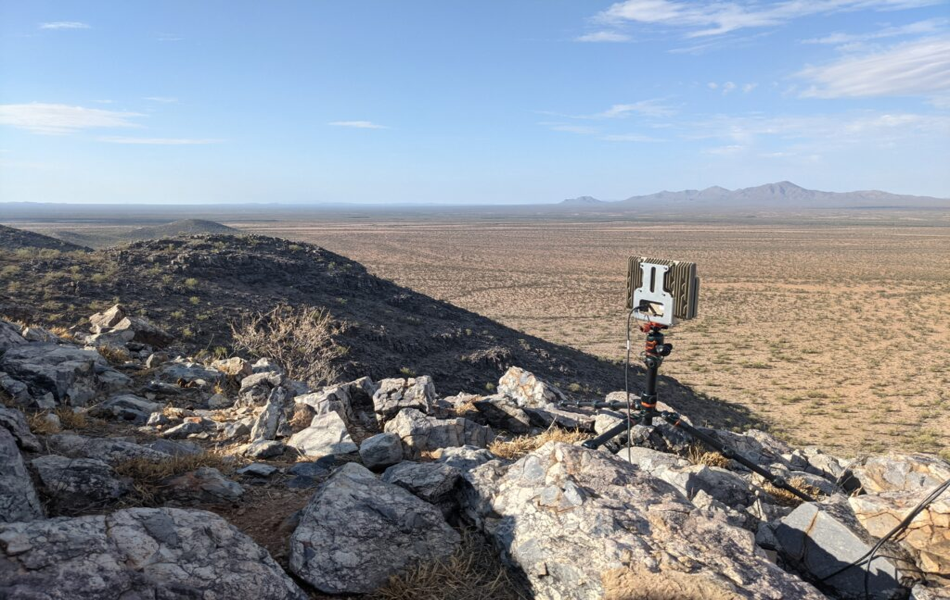
In September 2025, Echodyne announced that it had been selected as the radar provider for the Australian Defence Force’s counter-drone initiative, Project Land 156, a major modernization effort aimed at strengthening continuous C-UAS capabilities. Working alongside Leidos Australia and partners including EOS Australia, Acacia Systems, L3Harris Technologies and Department 13, Echodyne will supply its MESA radar technology to the project. CEO Eben Frankenberg highlighted the growing importance of C-UAS capabilities, noting that Echodyne’s architecture enables rapid global deployment of advanced radar systems to meet rising demand.
Digital Force Technologies Selects Echodyne Radar for Seraphim Counter-UAS Family of Systems (MilMag)
In November 2025, Digital Force Technologies selected Echodyne’s MESA radar systems as the primary radar across its Seraphim Counter-UAS family, strengthening autonomous detection, tracking, deterrence and defeat of drone threats. Integrated into the U.S. Marine Corps’ TERAPIN program, Seraphim systems rely on Echodyne’s high-fidelity data to support persistent sensing, tactical early warning and AI-enabled situational awareness for expeditionary and fixed-site defense missions. The partnership brings Echodyne’s EchoShield and EchoGuard radars into a modular ecosystem designed for austere, on-the-move and multi-domain operations. As CEO Eben Frankenberg noted, this selection shows that advanced defense programs continue turning to Echodyne radar for accuracy, precision and reliability.
Echodyne and Poland’s military institute of armored and automotive technology collaborate on integrating counter-drone radar into unmanned ground vehicles (European Defense Review)
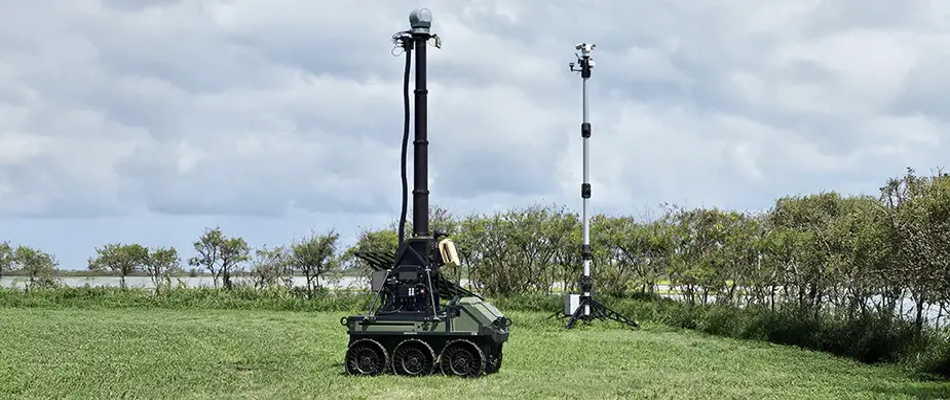
In November, Echodyne also announced a new collaboration with Poland’s Military Institute of Armored and Automotive Technology to integrate its counter-drone radar systems into unmanned ground vehicles developed by WITPiS and its industry partners. Working alongside longtime distributor Linc Polska, Echodyne will test and demonstrate how its high-fidelity MESA radars can enhance both civil and military UGV applications by providing precise, on-the-move detection and tracking of airborne threats. The partnership supports broader efforts to modernize land forces with advanced situational awareness tools. As CEO Eben Frankenberg noted, the goal is to deliver “best in class ground-based systems for detection and situational awareness.”
How a Startup Claims to Have Solved Radar’s Cost Crisis in the Drone Age (The Defense Post, Mahir Zeynalov)
In October 2025, The Defense Post editor Mahir Zeynalov sat down with Tom Driscoll, Co-Founder and CTO of Echodyne, who described how cheap commercial drones have upended traditional defense economics and opened the door for disruptive radar innovation. Driscoll explained that Echodyne’s metamaterials-based approach enables military-grade beam steering at radically lower cost, size, and power, making it possible to distribute high-performance radars widely enough to counter swarms. He discussed how Ukraine underscored the need for rapid iteration, software-defined sensors, and “modified commercial” thinking across the defense sector, while stressing that radar remains the most resilient sensing technology in the drone-versus-jammer contest.
Echodyne Radars Chosen by Zone 5 Technologies for Next-Generation Counter-Drone Defense (Everything RF)
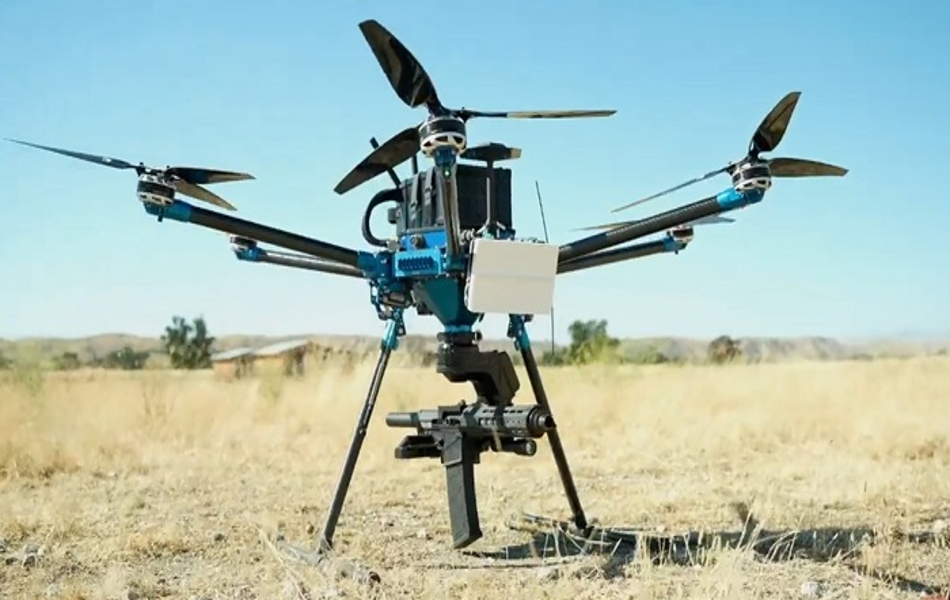
In December 2025, Zone 5 Technologies selected Echodyne’s MESA radars to power its next-generation Paladin Low Collateral Effects Interceptor, the first autonomous UAS interceptor on the DoD’s Blue UAS Cleared List. The partnership equips Paladin with EchoFlight airborne radar for ultra-low SWaP, high-precision airspace awareness, while Zone 5’s ground systems employ EchoShield to detect and track low-altitude UAS threats. Leaders from both companies emphasized that rapidly evolving drone threats demand highly reliable, adaptable sensing to safeguard warfighters. Acording to Echodyne CEO Eben Frankenberg, integrating Echodyne radars with systems like Paladin is central to “how we win on the modern battlefield.”
Defeating UAS threats requires complex and flexible solutions (Military Embedded Systems, John McHale)
In April 2025, Military Embedded Systems editorial director John M. McHale III sat down with Leo McCloskey, VP of Marketing at Echodyne, to explore why defeating modern UAS threats requires flexible architectures, rapid acquisition, and high-precision sensors. McCloskey emphasized that today’s battlefield demands faster adaptation, noting that Echodyne’s high-fidelity radar data can be quickly added to existing weapon stations to improve accuracy, classification, and engagement economics. He also underscored the importance of software-driven performance gains and open architectures like MOSA and SOSA to keep pace with evolving threats. As McCloskey put it, modern counter-UAS solutions increasingly hinge on “persistent high-precision radar track data” that trains sensors and directs weapon systems effectively in the kill zone.
DSEI 2025: OpenWorks launches new system for on-the-move targeting (Shephard, Damian Kemp)
Shephard Media’s Damian Kemp reported on OpenWorks Engineering’s debut of its Vision Pace on-the-move targeting system at DSEI 2025, a capability developed in collaboration with Thales and Echodyne. Vision Pace integrates OpenWorks’ AI-driven classifiers with Echodyne’s EchoShield radar and Thales’ TrueHunter sensor suite to detect, track, identify and precisely cue effectors against aerial threats across land and naval missions.
Kemp explained that EchoShield provides the medium-range detection backbone, slewing TrueHunter onto targets to enable microradian-level accuracy for layered air defence. Designed for expeditionary and mobile operations, Vision Pace marks a major evolution of the company’s Vision Flex system and reflects growing demand for agile, integrated counter-drone and air-defence.
“Listen In” Bonus: Countering Drone Threats at Critical Sites With Echodyne’s Leo McCloskey (Security Info Watch, Rodney Bosch)
SecurityInfoWatch editor Rodney Bosch sat down with Leo McCloskey, VP of Marketing at Echodyne, for a SecurityDNA podcast episode unpacking the growing danger drones pose to critical infrastructure. McCloskey explained how easy it is to buy or build capable drones, why recent executive orders elevate counter-UAS urgency and how high-fidelity radar has become the foundation for detecting and mitigating threats at airports, energy facilities and government sites. He also outlined practical steps organizations can take to harden their perimeters as drone incidents rise nationwide. Listen in to hear McCloskey break down why radar is now essential to securing America’s most critical sites.
Interested in reading and listening to more thought leadership from the Echodyne team?