
Accelerating Maritime Security Innovation with Future Ready Radar
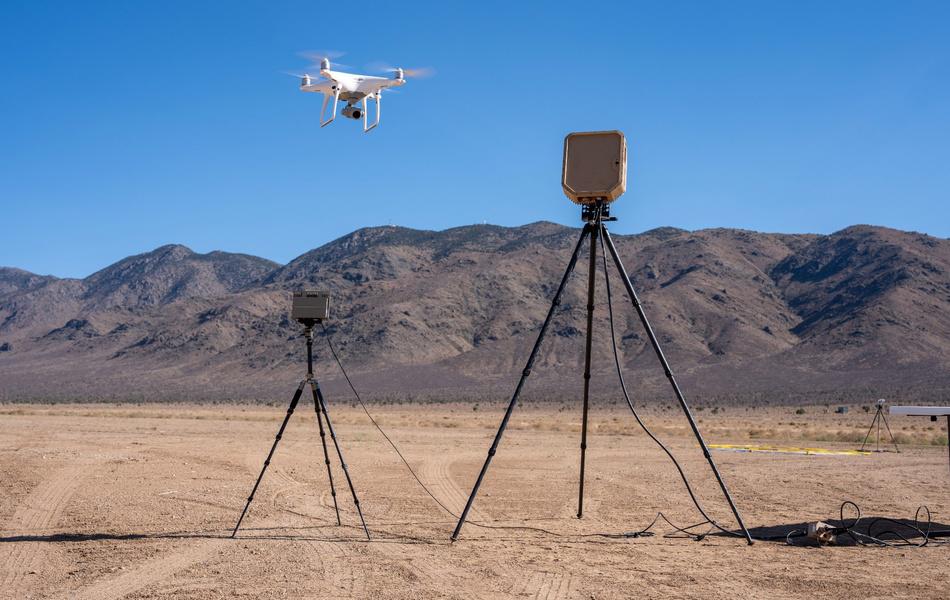
Echodyne supported the Advanced Naval Technology (ANTX) exercise for the second year in a row in Summer 2025 at Port Hueneme and NAWS (Naval Air Weapons Station) China Lake, California. During the exercise, Echodyne demonstrated its radar system’s capabilities and integrated with other novel technologies to support the Naval Innovative Science and Engineering (NISE) research and accelerate the identification, assessment, and follow-on engagement of leading-edge technologies to address gaps for the U.S. Navy and its interagency partners.
The multi-week-long exercise aimed to advance and operationalize state-of-the-art technologies to the naval forces and counter asymmetric threats to port and maritime security. The experimental exercise aimed to test and refine understanding of technological concepts, accelerate information exchange, and ensure the joint force maintains a competitive technical advantage.
There were multiple projects pursued throughout the exercise conducted as a series of scenario-based demonstrations, field experiments, and exercise activities at 21 venues in Southern California and remote sites in five states. The exercise included participation by more than 300 public and private sector organizations.
The scope of experiments and exploratory exercises included port and maritime incident response, maritime communications and data links, fleet maintenance and sustainment of expeditionary operations and more.
During the exercise, Echodyne supported two demonstration events focused on unmanned systems countermeasures and decision support and information dominance.
“ANTX gave us the opportunity to demonstrate our radar interoperability and agile design to accelerate maritime and port security innovation,” said Ross Douglas, Defense Regional Sales Manager at Echodyne.
Echodyne demonstrated its highly expeditionary EchoShield and EchoGuard radar’s ability to detect, disrupt, and interdict threats posed by unmanned systems to critical infrastructure and port and maritime security. Both radar systems rapidly deployed to counter Group I and Group II UAS that were closing, opening, crossing, and loitering up to 1,000 ft above ground.
Echodyne’s highly interoperable radar systems integrated with Neurocom’s Tactile-Augmentaion (TAG) System which leveraged Echodyne’s radar UAS data to provide haptic feedback that communicates to the operator where to look upon detection of the UAS.
The operator could simultaneously view the radar detections on Echodyne’s software user interface while also receiving the information through Neurocom’s haptic feedback sensor.
“Integrating our tactile-augmentation system with Echodyne’s radar gave operators instant, intuitive vibration cues that dramatically accelerated visual UAS target acquisition. Echodyne’s high-fidelity detections enabled our system to deliver precise, directional feedback allowing the operator to maintain visual on the threat,” said Alex Rosenbaum, CEO at Neurocom.
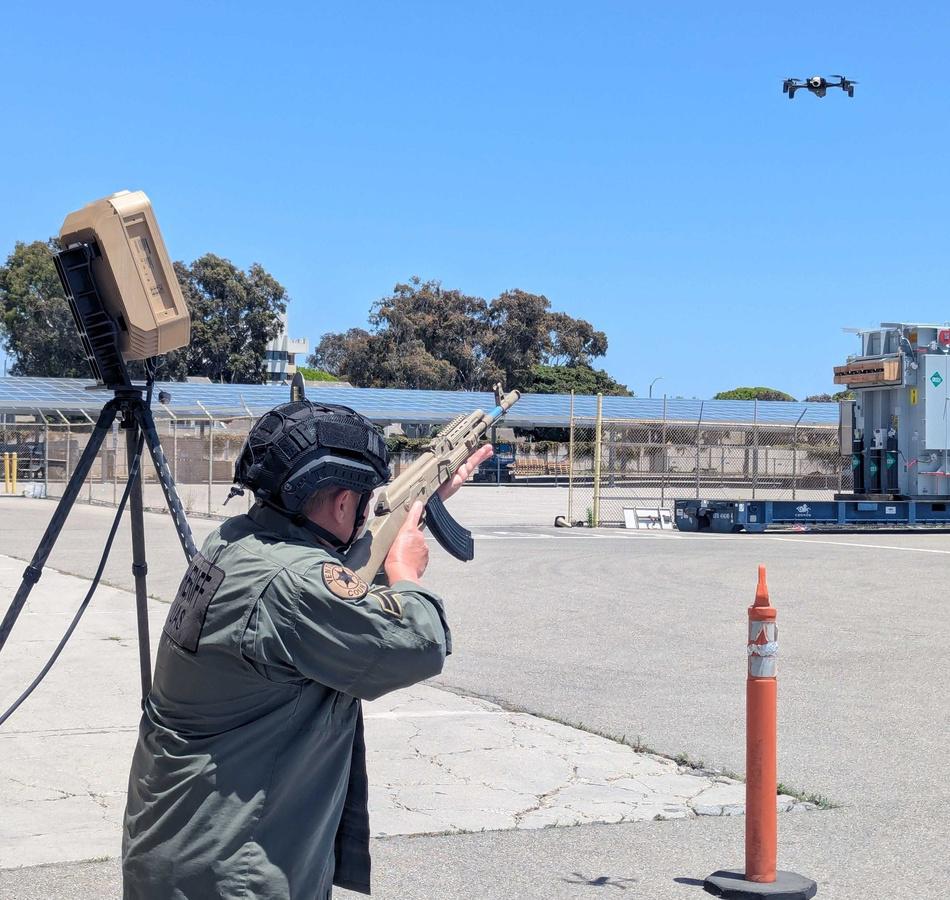
The integration of Neurocom’s haptic device system with Echodyne’s high-fidelity radar data improved domain awareness and speed of visual target acquisition by the operator which created decision time and space for engagement with effectors. The concurrent data streaming and signaling to the operator ensured the operator stayed focus on the present situation to make fast defeat decisions as Counter-UAS approached.
“Our radar data fused seamlessly with Neurocom’s state-of-the-art haptic feedback device and turned radar data into enhanced actionable insight for operators in port and maritime C-UAS missions,” said Ross Douglas, Defense Regional Sales Manager at Echodyne.
Throughout the exercise, Echodyne’s radar data seamlessly integrated into the C2 architecture and provided a common operating picture to a command post and higher echelons.
“Echodyne radars offer operational versatility, interoperability and contribute to an effective layered defense in the port and maritime domains. The potential to classify threats and populate a common picture with situational details layers the decision space for an effective counter-UAS response” said Brendan Applegate, Lead for Fleet Experimentation and Exercises at NSWC Port Hueneme, Office of Technology.
During ANTX, Echodyne next-generation radar systems strengthened current maritime security solutions and demonstrated the capability to integrate with entirely newly developed technology.