
As drone technology continues to evolve, understanding the regulations and technological advancements that enable safe and efficient drone operations is crucial. The Federal Aviation Administration (FAA) provides guidelines for visual observation of drones while in flight.
While there are specific unique requirements for UAS of certain size and weight, this article covers essential concepts such as the role of visual observers, Beyond Visual Line of Sight (BVLOS) operations, and the emerging importance of electronic observers and advanced detection and avoidance systems.
According to the FAA’s guidelines for piloting a drone, either the drone pilot or a visual observer must maintain visual line-of-sight without using vision-enhancing tools (like binoculars). This means the drone must not be flown beyond the point where the pilot or visual observer can no longer see it directly. While the FAA does not require a secondary visual observer, maintaining visual contact with the drone during flight is essential for safety and compliance.
A Visual Observer (VO) is an individual who assists the remote pilot in command (RPIC) by maintaining visual contact with the drone and scanning the airspace for potential collision hazards. Having a visual observer allows a drone pilot to move the UAS in a broader area and to navigate around visual obstructions. The RPIC must ensure that the visual observer can see the unmanned aircraft as specified in § 107.31. The visual observer continuously communicates with the RPIC about what they are seeing near and around the drone.
With special consideration, the FAA may grant specific or limited authorization to fly drones beyond visual line of sight. Recently, the FAA granted BVLOS approval to four companies. These approvals allow these companies to operate drones without a visual observer, a significant advancement for the drone industry. Two of these companies will use BVLOS approvals for drone package deliveries, a major milestone for the industry. One of them has already been conducting BVLOS flights safely in other countries and has worked closely with the FAA to meet rigorous safety standards. This approval marks a crucial step towards integrating autonomous drones into U.S. airspace, making drone delivery scalable and affordable.
These approvals come with certain limitations, such as altitude restrictions and prohibitions on flying in densely populated areas. However, they represent a significant step forward, allowing these companies to conduct long-range operations without visual observers and setting the stage for broader adoption of BVLOS capabilities. Advocates within the UAS industry are hopeful that future BVLOS operations may be broadly enabled by use of detect and avoid (DAA) systems onboard drones in flight or by using ground-based electronic observer solutions.
DAA systems enable pilots to operate UAS assured that the UAS will detect and avoid other aircraft and obstacles autonomously in flight and adjust their flight pattern to avoid the conflict. These systems use sensors, such as radar, an ADS-B receiver, and cameras to detect and avoid obstacles in the airspace.
The requirement for detect and avoid technology is particularly important for BVLOS operations, where the pilot cannot see the drone directly. Advanced DAA systems help mitigate the risk of mid-air collisions, which is essential for integrating drones into the busy and complex National Airspace System. BVLOS approval by the FAA is anchored on the presence of a proven reliable detect and avoid system.
The term electronic observer first took hold amongst the scientific community. As security and airspace applications embrace new technology – drones - the term is finding a new life. While DAA systems comprise electronic sensors specifically designed to detect and avoid obstacles autonomously, electronic observers refer to a broader range of technologies used for monitoring and surveillance. In the case of drones, the electronic observer component of airspace deconfliction is a sensor or a stack of electronic sensors that replace the human visual scout to provide data that aids in DAA maneuvering.
Electronic sensors perform the same functions as a visual observer would by maintaining awareness of the drone's position and scanning for potential hazards. However, electronic observers go beyond what a human observer can achieve, especially in BVLOS operations since calibrated sensors are not impeded by human frailties such as limited sight range, the sun blinding their view, or an inability to calculate an object’s exact position in space.
Electronic observers may revolutionize drone capabilities, enhancing security, logistics, and public safety and lending efficiency, scalability, and cost-effectiveness to drone operations.
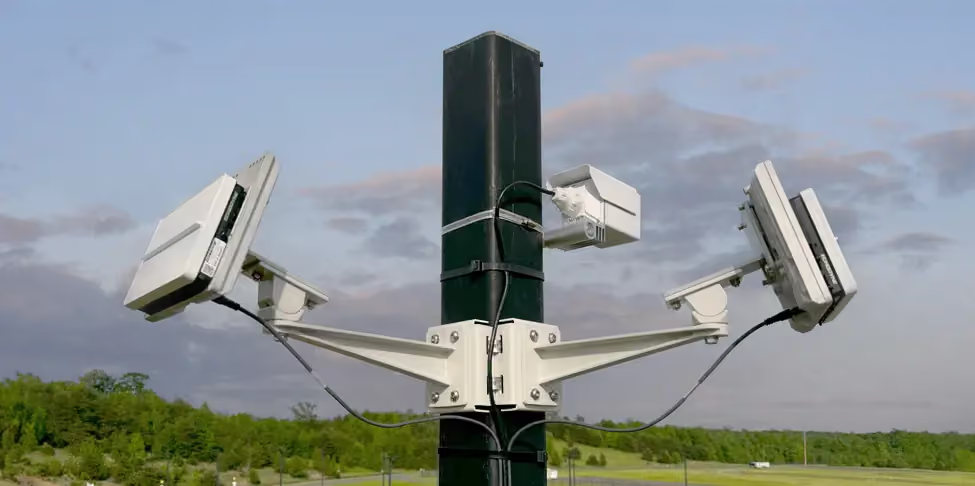
Radar systems are renowned for their ability to detect a wide range of objects, both in the air and on the ground. This capability is crucial in environments where multiple types of threats and activities need monitoring. For this reason, UAS players like Kongsberg Geospatial turn to high-performance radar as an electronic aid for BVLOS.
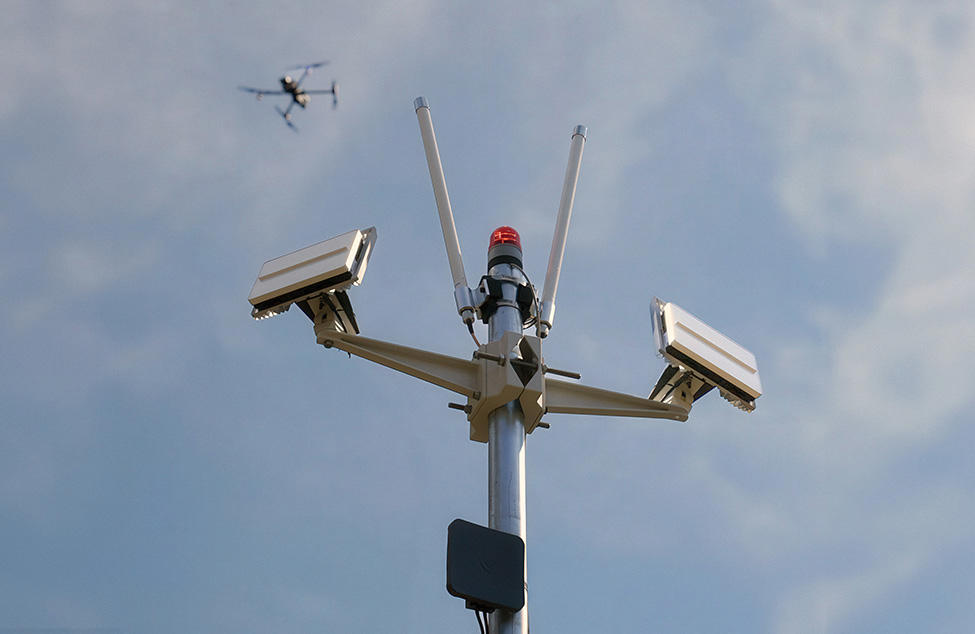
Depending on the BVLOS application, radar can be deployed on-board the drone or on the ground. In either case, precision radar data of objects in the air around the drone informs detect and avoid maneuvering.
Throughout this article, we have explored the vital role of Vos and the FAA's guidelines for maintaining visual line-of-sight (VLOS) during drone operations. Additionally, we examined the significant advancements in BVLOS operations and the crucial DAA systems required for safe BVLOS flights. These systems, which include sophisticated technologies such as radar and ADS-B receivers, ensure safer and more reliable drone operations.
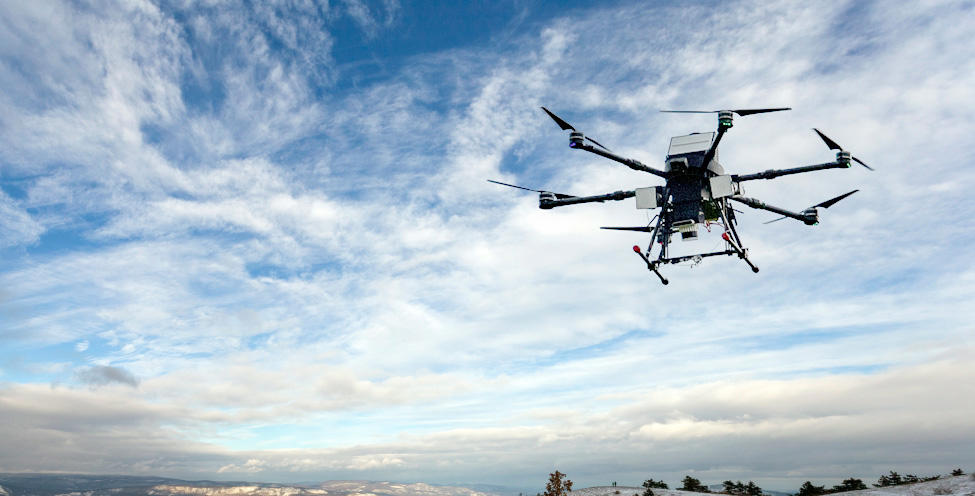
By integrating advanced sensors and radar systems as electronic observers, drone programs can extend their operational range and achieve more efficient and scalable operations. This advancement is crucial, as it enables organizations to optimize efficiency, reduce costs, and expand the potential applications of drone technology across various fields, including security, logistics, and public safety.
Understanding these technological advancements and regulatory requirements allows organizations to better leverage drone technology, improving the operational efficiency and safety of their drone programs. Embracing electronic observers represents a transformative step forward in the drone industry, driving innovation and unlocking new possibilities for drone applications.

