
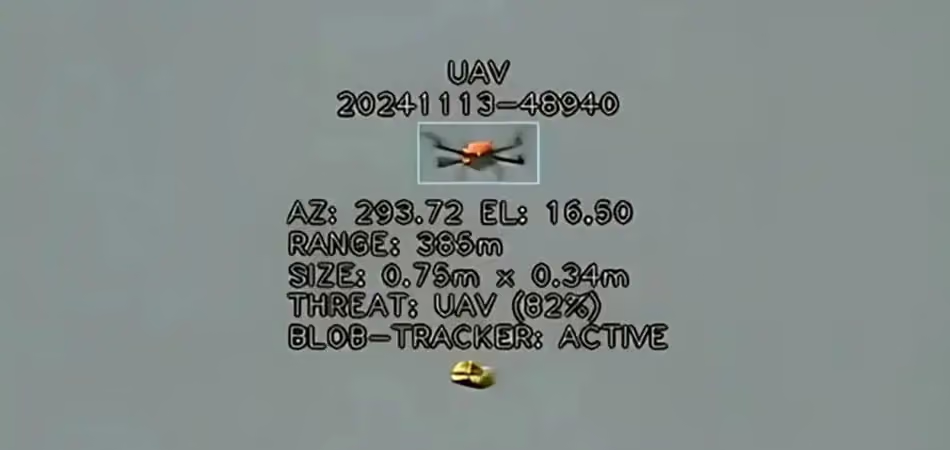
In a co-authored opinion article titled “How law enforcement can detect and apprehend criminal drone pilots at large events,” Yaniv Mendelson, Director of Business Development at Echodyne tells Police1’s audience how drones are an escalating threat at concerts, sports events and other public gatherings, and the crucial role that multi-layered drone detection technology can play in tracking and identifying bad actors.
Writing alongside Robert Tabbara, founder and CEO of AirSight, the two point out that a highly publicized sighting at the Baltimore Ravens’ M&T Bank Stadium in January caused the National Football League (NFL) to rethink its security strategy. A second high-profile sighting at a Green Day concert in Detroit led to the band being rushed off stage and the performance halted as security assessed the threat.
Such incidents are made more complex by the fact that current Federal Aviation Administration (FAA) law prevents police or security from stopping a drone in flight, even if it poses a threat, as drones enjoy the same protection as other aircraft in the National Airspace System (NAS).
“Criminal actors can use drones to cause myriad disruptions, including everything from delaying the game or concert to evacuating a venue, to more serious and dangerous scenarios such as smuggling in contraband or carrying out targeted attacks. These concerns are exacerbated by the fact that drones are increasingly able to carry larger payloads, raising their potential to transport weapons or bombs into crowded spaces.”
“Radar is the core provider of data that informs and validates all the other sensors used in the multi-layered approach. Since it is not reliant on the drone’s communication system for detection, it’s considered an essential sensor layer that’s crucial in detecting drones of all sizes, speeds, and classification.”
Read the full article on Police1 with analysis of the role of law enforcement and the most effective tactics for dealing with drone threats here.

