
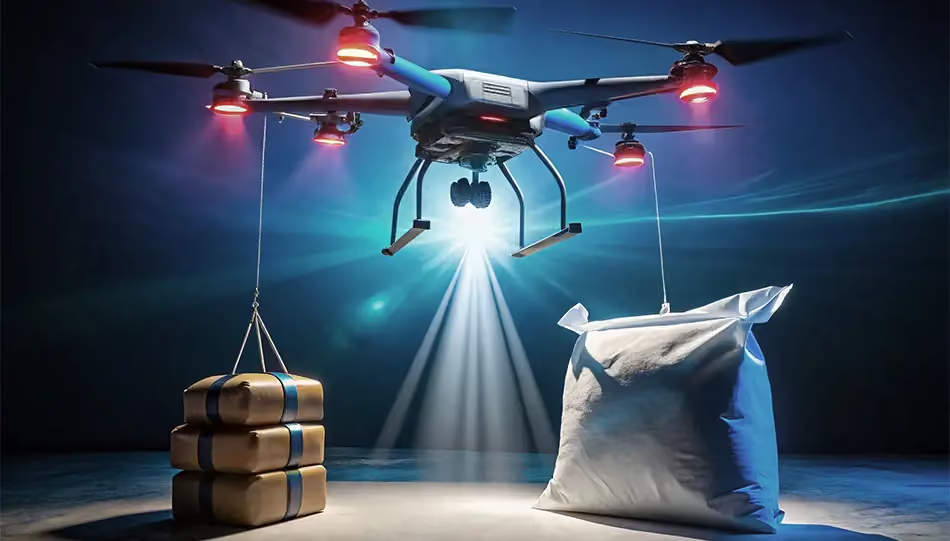
The rise of drone contraband in corrections facilities is creating a new kind of crisis—one where airborne threats can bypass walls, fences, and traditional surveillance systems in seconds.
For state and federal corrections officers, the issue is not theoretical. In some regions, drone-related contraband drops now outpace attempts via visitors or corrupt staff. From narcotics to cell phones to weapons, the payloads pose immediate risks to inmate behavior, staff safety, and public security.
In a recent interview hosted on LinkedIn Live, Rob Green, Executive Director of the American Correctional Association (ACA), called the surge in drone activity “a systemic threat that is both sophisticated and evolving.” Green emphasized the urgency of equipping facilities with technologies that enable detection and early response before a drop occurs.
As drone threats increase in complexity, so must the detection architecture used to stop them. Industry best practice calls for a layered sensor stack—a combination of RF, optical, acoustic, and radar systems—each contributing unique capabilities for detecting, tracking, and classifying aerial targets.
In this stack, radar plays a critical role:
Radar systems, like Echodyne’s MESA®, strengthen a facility’s ability to detect drones before they reach the perimeter, giving security teams the time and insight needed to respond.
With staff stretched thin and traditional contraband pathways evolving, corrections leaders are turning to sensor-driven solutions to defend airspace and maintain facility integrity.

